Philadelphia’s CBD office market is drawing new investor attention
Mar 31, 2015
Philadelphia may lack the famous addresses of New York City and the dominance in a booming sector like San Francisco in tech, but the city does offer investors and companies one important quality, and that’s stability. It’s that stability that’s steering investment toward the expanding and robust Philadelphia office market.
Compared to other U.S. cities, Philadelphia’s Central Business District office market is strong; the city experienced booming transaction volume activity in 2014 over its five-year historical average — an extraordinary increase of 223 percent — and in terms of relative market activity, the city jumped from #20 to #13 in our national averages. In addition, office vacancy and cap rates are dropping, and rents are climbing.
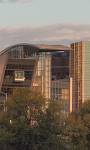
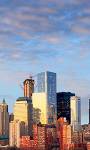
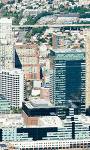
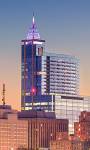
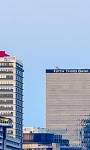
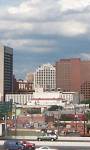
Philadelphia’s Central Business District (CBD) comprises Center City, and the highest concentration of class A office properties lies west of Broad Street. The CBD holds the city’s most famous office building, the Comcast Center, as well as new office developments, including the new Comcast Innovation and Technology Center and the FMC Tower in University City, and a number of high-profile office properties were recently transacted and currently under agreement.
The recent flurry of transactions, positive numbers in key metrics, and early indicators of leasing activity in new buildings paint a bright picture for the Philadelphia office market. As a result, investors from gateway cities are looking deeper into the Philadelphia market, and they’re investing thanks to more attractive higher yields.
By the numbers: Philadelphia’s Central Business District
A handful of metrics points to the strength and vigor of the Philadelphia CBD office market. From cap rates to rising rents, these metrics clearly show why investors from across the United States are pouring their money into office properties throughout Philadelphia’s CBD.
A dozen large transactions: From January 2014 to present, there were 12 class A CBD office transactions over 500,000 square feet in Philadelphia, totaling $1.6 billion. This flurry of activity bests the peak velocity of mid-2006 through 2007, in which 10 similar-sized transactions for $1.5 billion were executed. Office space bought and sold during this new peak period includes 1515 Market St., 1635 Market St., the Penn Mutual Towers, and the Curtis Center at 170 S. Independence West. In total, more than 7.2 million square feet changed hands.
A further breakdown of those numbers show the increasing demand for Philadelphia’s office: The average square foot price has risen to $223 and the cap rate now has fallen below 7% during this new peak, up from $196 per square foot and a 7%+ cap rate during the 2006-2007 boom.
Dropping cap, discount rates: Integra Realty Resources’ (IRR) Viewpoint 2015 indicated Philadelphia maintained a 7% cap rate for class A CBD office properties. But market transactions and discussions with brokers reveal caps going as low as 6.5%. And some local REITs and private equity buyers are even reporting low 6% cap rates for their best assets, though there is no transactional activity to support this assertion at present.
Plus, IRR Viewpoint indicated an 8% discount rate for class A properties, but market participants are reporting rates in the mid-7% range.
Vacancy rate continues to fall: At the start of 2014, the rate stood at 12.8%. But with good absorption and the market activity over the past 16 months, the vacancy rate is diving, and now stands at just over 10%.
The best news is rents: One important metric is up, and that’s class A rents. Viewpoint estimated the average price per square foot at $28.60. But in the few months since the report was released, the price has jumped, and now the price averages out to $29.56 — a 3.4% increase in four months. This uptick in rental rates is well above the normal trend for Philadelphia, and it’s a large increase compared to historical trends.
There are a few reasons why rents are increasing. First, larger companies are optimistic about the economy and future prospects, and are comfortable paying larger rents. Secondly, class B/C office space is increasingly constrained as developers convert these properties to apartments, leaving smaller tenants that traditionally relied on class B space to pay higher rents with less ability to find alternative spaces. Overall, the increase in rents is a very positive trend for class A properties in Philadelphia’s CBD.
Why Philadelphia’s an investor favorite
Investors want stability and higher yields. Cities reliant on one industry, like Houston on energy, go through boom and bust cycles, seeing drastic swings in rental prices and rental rates. Philadelphia, however, has seen steady increases and no major drops in key metrics like rental rates and employment thanks to a diverse range of industries in the area. Two recent examples of that are design and architecture firm HOK and technology company IntegriChain, which moved into Philadelphia earlier this year.
Philadelphia’s office market now sits in the expansion phase, and should continue this steady course as the two biggest developments — the Comcast Innovation and Technology Center and FMC Tower – come online over the next few years. Plus, rumors are abuzz that major tech firms are looking to establish a “beach head” to be close to Comcast and their new Comcast Innovation and Technology Center. The informal “eds” and “meds” sectors also continue to play a strong role in the office market, as new developments from Penn, Drexel, CHOP and Penn Medicine’s Hospital of the University of Pennsylvania and Presbyterian Medical Center will come online over the next few years.
There is a lack of new office construction outside of the Comcast Innovation and Technology Center and FMC Tower, both of which have significant pre-leasing activity. For the foreseeable future, the lack of new supply and increasing office demand will reasonably continue fueling Philadelphia’s perception as a safe bet.
Investors coming from gateway markets are finding that Philadelphia offers stability in the office market while still producing yields as high as 8%, well above their current returns. Recent findings about decreasing cap and vacancy rates, coupled with increasing rents, is making the city even more attractive to outside investors. Philadelphia may not be the hottest market in the United States, but as a stable and diversified city, it’s seeing renewed interest from out-of-area investors and explains the recent spike in transactions, increasing pricing to historical highs.
Author: John Pasquarella