Year in review: The 5 biggest commercial real estate trends of 2015
Jan 5, 2016
2015 has come and gone, and what a year it was for commercial real estate — rents soared, big buildings came with even bigger price tags, and the multitude of CRE segments bounced back to pre-recession levels.
Today, let’s look back at the biggest commercial real estate trends from 2015.
1) The year of different conversions: The trend of “warehouse to whatever” has been eclipsed by all other conversions. In 2015, an office building in San Jose became apartments, developers began slowly transforming former commercial spaces to apartments and retail in Wilmington, Delaware, to appeal to the millennial crowd, and there’s even talk of converting an entire city into a medical destination in Minnesota. Of course, warehouses throughout the country are still being redeveloped into offices and apartments, but in some cases they’re being carved up for niche manufacturing businesses.
Another trend we’re seeing is churches being converted into apartments and office space – more than 1,000 transactions like this were completed last year. In some cases, developers are working with congregations to preserve worship space while also adding retail, multifamily units, or office space.
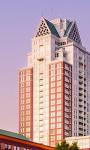
2) Building up, not out: Is the era of sprawl over? We repeatedly saw developers build up, rather than out, over the last year. Developers in Florida went for tall, luxury buildings in Fort Lauderdale, for example. Los Angeles’ expanding tech scene has resulted in new apartment and office development happening in its downtown, and not in the city’s surrounding outskirts. Even in Brooklyn, which remains a major growth area, developers are repurposing the upper levels of commercial buildings to meet office and housing demands; they’re even buying air rights to expand up. Warehousing is no different – developers are building new industrial sites with ceilings 40 feet tall or higher, saving them money, minimizing the building footprint, and increasing square footage for product storage.
We also got a glimpse of the future. Chicago is certainly a city known for its tall buildings and architecture, and a number of supertalls (buildings taller than 300 meters) proposed in 2015 would add new heights to the skyline, as well as thousands of hotel rooms, square footage of office space, and residences.
3) A Southern cities revival: No question that Southern cities have gained a lot of popularity. Major cities in the South have seen population growth since the 2010 census, and the commercial market is reacting in positive ways. Nashville development exploded with new office space and millennials are landing in Charleston, causing apartment vacancy rates to fall. The Port of Savannah is driving a flurry of commercial real estate activity, and millions of square feet of industrial space has been built around the port as a result. The money is also flowing into Memphis for new multifamily development.
On top of this influx of investment money, we’re seeing very interesting building trends in these Southern cities. Take, for example, Winston-Salem, North Carolina, where a multifamily development added 65 apartments in just 47 days thanks to modular construction.
4) A healthy medical office building market: The medical office building market got a clean bill of health in 2015 – in fact, it’s healthier than it’s been in a decade. Demand for medical office buildings (MOBs) remained strong as cap rates dipped, interest rates stayed the course, and the spigot of unprecedented capital remained on this commercial segment. The stability of the medical real estate sector is causing investors to funnel money into MOBs, short-stay hospitals, and other clinics. And, because many Class B spaces are in need of upgrades, the sector is anticipated to remain strong for the next few years and rents are expected to grow.
5) The changing face of retail: Retailers have seen the writing on the wall, so 2015 was the year of adapting to consumers’ tastes and trends. E-commerce has forced retailers to marry their brick-and-mortar stores with warehouses and rethink their online sales strategy more generally. But malls certainly aren’t dead – far from it in fact, and some cities are adding more retail to meet demand.
At the same time, some retailers are shifting their approach and going small, focusing on specific store types to boost sales. And, like everything else in San Francisco and Miami, retail shopping centers, malls, and outdoor markets are seeing record low vacancy rates and tons of new investment money.
That’s what commercial real estate looked like in 2015. Check back soon to read IRR’s projections for 2016 in our annual Viewpoint trends report.
Author: Michael Welch